
By Daniel Lopez, Church Realty
3 Quandaries That Churches Experience — and How Relocation May Address Them
Local churches are truly living organisms. They grow, change, adapt, and—like all living things—face seasons of both flourishing and challenge. Every stage of a church’s life brings a unique blend of opportunities and obstacles, often with competing priorities that require difficult trade-offs.
Some of these tensions are ever-present:
- Content vs. delivery — How do we preserve the truth of the message while making it accessible in today’s world?
- People and their needs — How do we serve a changing congregation with diverse expectations?
- Space constraints — How do we match ministry vision with physical capacity?
Over decades of working alongside local congregations, we have consistently seen three recurring “quandaries” that weigh heavily on church leadership. These challenges, when left unresolved, can drain vitality from the ministry. In many cases, they lead to a key question:
“What if we moved?”
- The Need to Right-Size the Facility
Simply put, sometimes the building helps the ministry, and sometimes it hinders it.
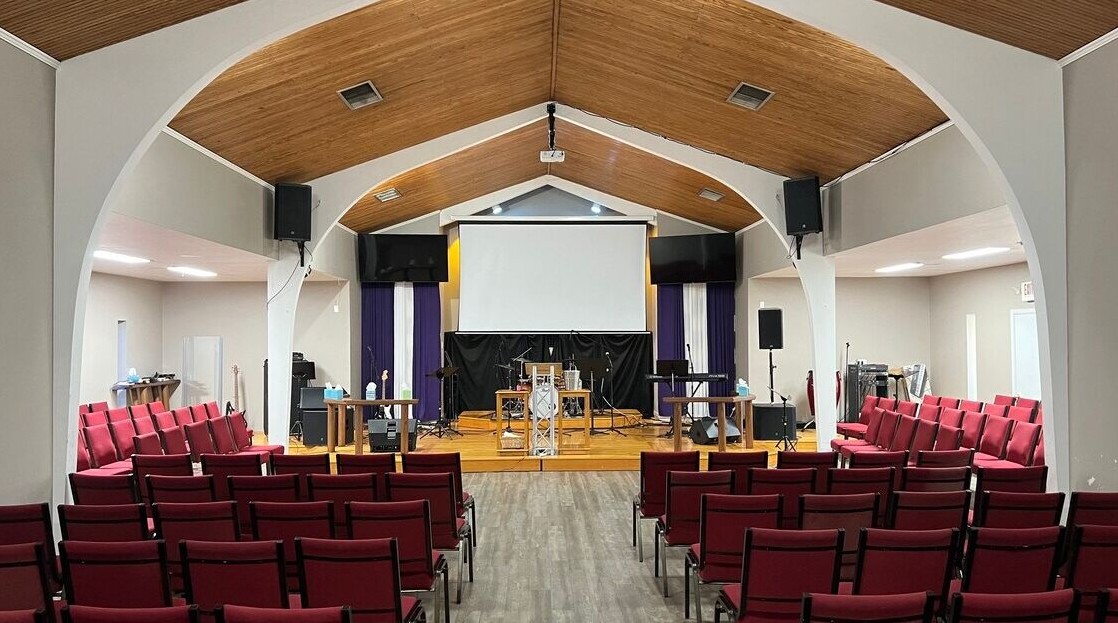
- Too small: Young and growing churches often find themselves bursting at the seams—running out of sanctuary seating, classrooms, parking, and even office space. When space becomes a barrier, momentum stalls.
- Too large: Mature or plateauing congregations may find themselves with more square footage than they can afford to maintain. Empty rooms and unused wings become financial liabilities rather than ministry assets.
In both cases, facility size needs to match ministry needs—not the other way around. The process of resizing, whether by expanding or downsizing, requires careful planning, transparent communication, and disciplined execution.
- The Congregation No Longer Lives Nearby
Most churches begin as deeply local expressions of faith. They may start as:
- A neighborhood Bible study in a leader’s living room.
- A spin-off from a larger congregation nearby.
- A gathering of extended family or a cultural affinity group.
Early on, proximity fuels connection. Members live close enough to gather easily for worship, fellowship, and ministry. But over time, people move. New members join from further away. The ministry radius expands, and the geographic “center of gravity” shifts.
When a large portion of the congregation lives far from the original facility, ministry logistics—event planning, volunteer coordination, pastoral care—become more complex. At some point, the church may realize that its building is no longer located in the heart of its community.
- A Facility in Decline
Buildings, like people, age. Roofs leak. HVAC systems fail. Parking lots crack. Carpets wear thin.
One of the most common—and costly—mistakes churches make is deferring maintenance in favor of more “visible” ministry needs. Unfortunately, deferred maintenance rarely stays hidden. Visitors notice. Members feel the wear. Deteriorating facilities affect morale, credibility, and the ability to attract newcomers.
A building in disrepair is more than a financial burden—it can become a spiritual drain. When the physical environment communicates neglect, it subtly undermines the message of hope, excellence, and care that the church is trying to convey.
When These Challenges Converge
Any one of these quandaries is a serious matter. But when all three appear together—mismatched facility size, a dispersed membership base, and a deteriorating building—the weight can be crushing for church leaders.
In such moments, incremental fixes often aren’t enough. A more radical, strategic solution may be needed.
Considering Relocation
Relocation can address all three issues in one decisive step:
- Right-sizing the building to match ministry needs.
- Re-centering the facility in the heart of the congregation’s current community.
- Renewing the physical space to remove the burden of costly repairs.
Make no mistake—relocation is not simple. It usually involves two major real estate transactions (selling the current property and purchasing a new one), each with its own complexities. The process requires wisdom, prayer, and the guidance of experienced advisors.
Yet, when done well, relocation can bring:
- A fresh start and renewed vision.
- Greater financial stability.
- More effective outreach.
- A better return on ministry investment.
For decades, we’ve walked with congregations of every size, ethnicity, culture, and vision through the relocation journey. We know the risks, but we’ve also seen the incredible rewards.
If your church is wrestling with these challenges, we would be honored to talk with you.
Call us at (281) 744-0644 or Contact Us for a free, confidential consultation.
AVAILABLE CHURCH PROPERTIES
Propiedades Disponibles